
Life changes.
My brain might be broken but it’s ok
It’s a hot, sunny winter morning and I’m digging for wild onions in the mountains of Lebanon. The wild onion has a distinctive look. Its long, green stems are darker and firmer than the surrounding grass. The bulb is buried deep underground, and I decide that the easiest way to harvest it is to grab the whole thing, wriggle it around to loosen its grip on the soil, and pull.
Sometimes it doesn’t work. The stems snap, coating my hand in the aroma of faint garlic. But sometimes it does work and the bulb comes barrelling out of the earth, round and white and caked in fresh dirt. Something about the process makes me think of childbirth. It’s an oddly satisfying feeling.
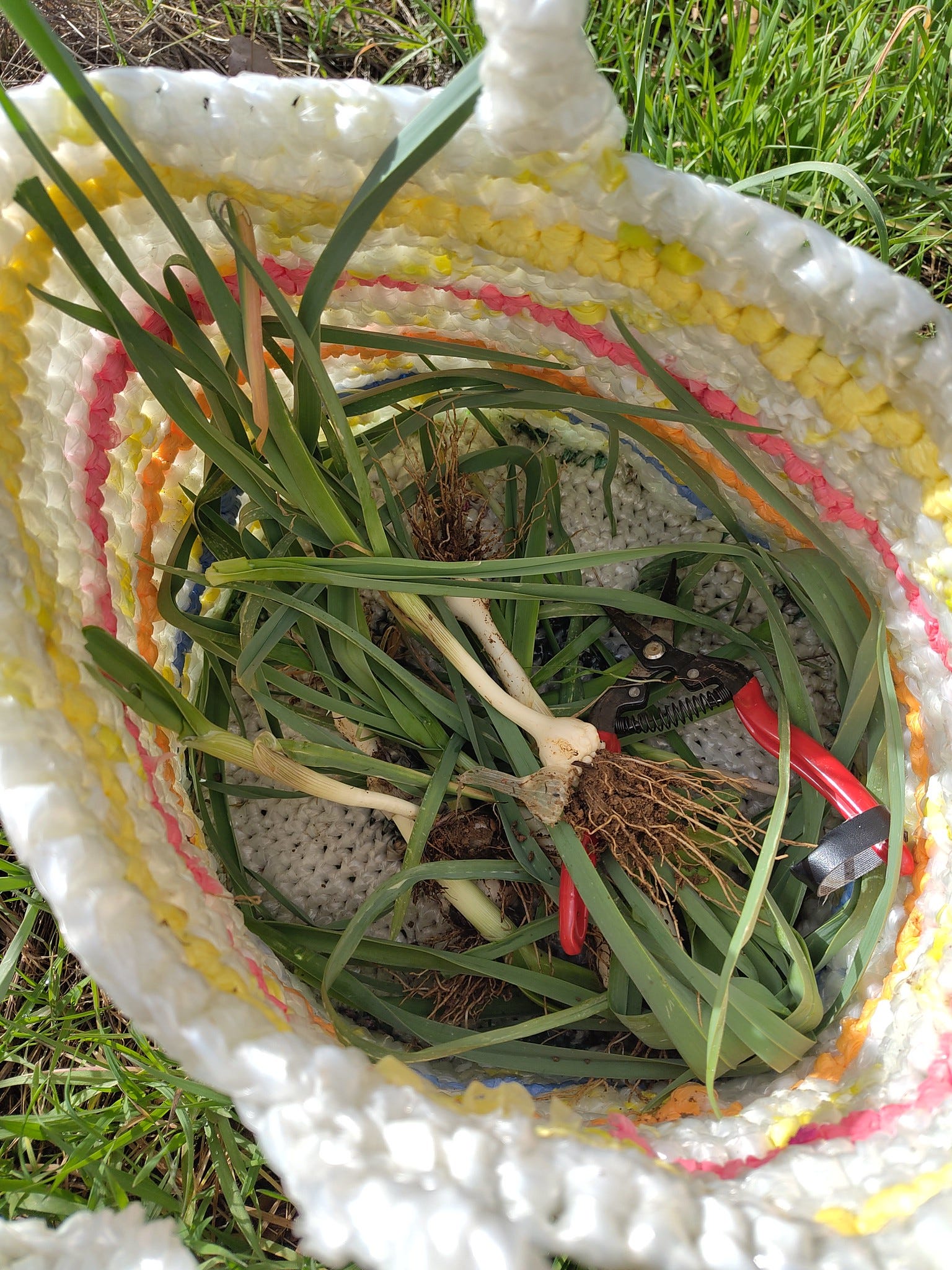
Harvest. When was the last time I harvested something in the wild? I am eleven, I think, and we are living in a small college town in Georgia. My mother is a grad student and we don’t have a car. On one of our long walks home from the computer lab, she spots a crop of wild chives growing near a soccer field, and we come back the same day with plastic bags and scissors and cut down as much as we can find. “I used to do this when I was a child in China,” she says, and in my head this is exactly how all the people passing by must see us: poor, hungry Chinese peasants squatting in the grass, cutting grass, eating grass. At home, my mother washes the wild chives and dices them and folds them into a bowl of seasoned ground meat. The dumplings she makes are delicious.
Now I am in a small village in Lebanon, a place of cottages and orchards and olive trees and dry, gentle hills. The scooters and honking cars and congested sidewalks of Beirut are a distant dream. The guide leads us off the stone path weaving through the village, into overgrown grass, between unassuming apple trees, over rushing water where the only way to cross is to hug a tree trunk and accept an outstretched hand.
Who owns this land we are foraging on? Does anyone own it? The guide plucks a small yellow apple from a tree and tells me to taste. The flesh is curled and shrivelling, half-eaten by insects and the elements, but the taste is rich and sweet. Later on he cuts a handful of wild mint leaves from the side of the road and tells me to smell. These are the same wild mint leaves that are served in plates of tabbouleh, in cold glasses of tea and lemonade at expensive Beirut restaurants. But out here, it’s free.
It turns out I’m bad at foraging. I can’t tell which plant is the one people use in teas for treating depression (the guide, wryly: “Living in Lebanon, we all need it”), and which is just a weed. I can’t find a single stalk of watergrass when I stalk the grass along the water. So instead, I focus on the things I know. I pick up olive branch cuttings that litter the side of the road for the vase in my living room. I pluck the last remaining lemon from a lemon tree.
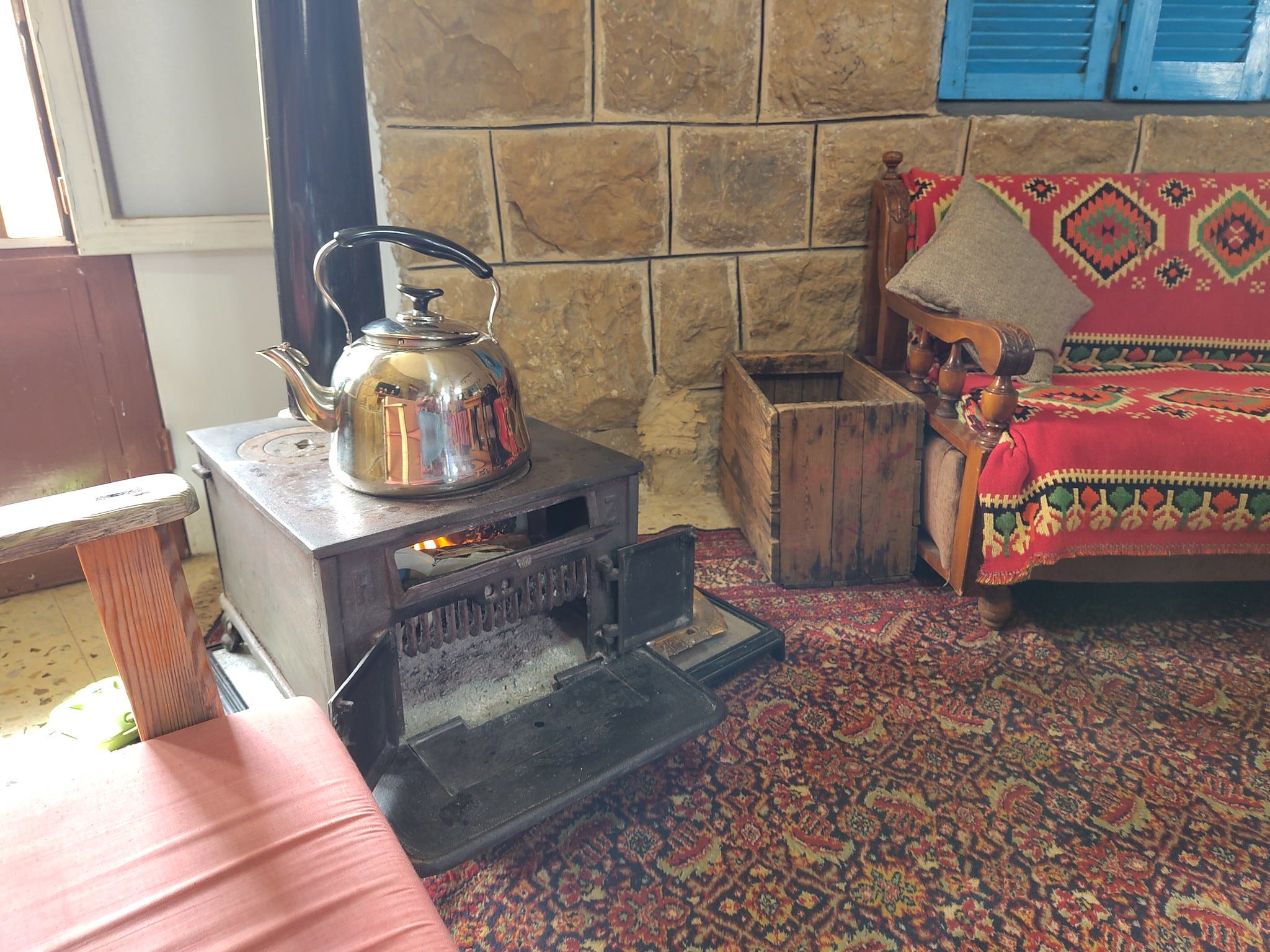
Two hours later we are at a local guesthouse. The owner, a friendly woman in a pink sweater, will show us how to cook a traditional Lebanese meal with the herbs we’ve just gathered. The table is set, flour ready. In the corner a large kettle of black tea boils on the stove. I curl up on the couch by the stove and close my eyes, feel myself sink deeper and deeper. Just a little rest. I’ll get up soon. I want to watch her cook.
And then I am awake again and it’s already time for lunch.
Earlier that week my doctor in Switzerland had suggested that I file for disability benefits. “I don’t know about the rules at your job,” he said, “but if you were working for a Swiss company, you’d quality for it.”
By then it had been just over a year since I left Switzerland and moved to Lebanon for work. Since the worst – but also most eye-opening – year of my life began. At work, something was happening that unnerved me. Here are some facts about me: I learned to read by age three and was reading Jane Eyre when I was six. In 2017 I wrote my master’s thesis on the inclusion of marginalized communities in Colombia’s sustainable development policy. During the first years of Covid, I single-handedly ran communications for a nonprofit initiative and performed the jobs of three people.
In spring 2025, it had become nearly impossible for me to sit in front of a computer and read a report for more than five minutes at a time.
I was in constant pain. Pain, brain fog, low blood pressure, dizziness, and debilitating episodes of anxiety triggered by unknown sources. At my office there was a room that housed exercise balls, a massage chair, and some floor mats – I assumed others used it for praying, pumping, maybe the occasional nap. When the room was free, I’d slip inside and curl up on the floor mat, checking my phone every few minutes to make sure I wasn’t absent from my desk for too long. Was my status green or yellow on Teams? Had any new emails come in? When the room was occupied, I went downstairs to the office clinic and held my hand out for a Xanax. There seemed to be an infinite supply.
At one point I was put on Lorazepam and I was so ashamed. The third season of The White Lotus had just come out and everyone was laughing at Parker Posey’s character – the Lorazepam-addicted mom with the crazy southern drawl, unaware of everything that was happening, drugged out of her mind. How could I have anything in common with this woman? I stopped taking the pills.
It’s a cold, dreary winter evening in France and my doctor here has just diagnosed me with carpal tunnel syndrome. In the mornings my fingers are so stiff and painful that I can’t make a fist. She writes me a prescription for an attelle, wrist splints that I have to wear when I sleep. Tomorrow is the first day of the lunar new year.
“I’m so frustrated,” I tell my therapist. “I feel like my body actively, sincerely hates me.”
Tonight I’m so angry at my body that I can’t imagine falling asleep. But after a few minutes on my e-reader, I do.
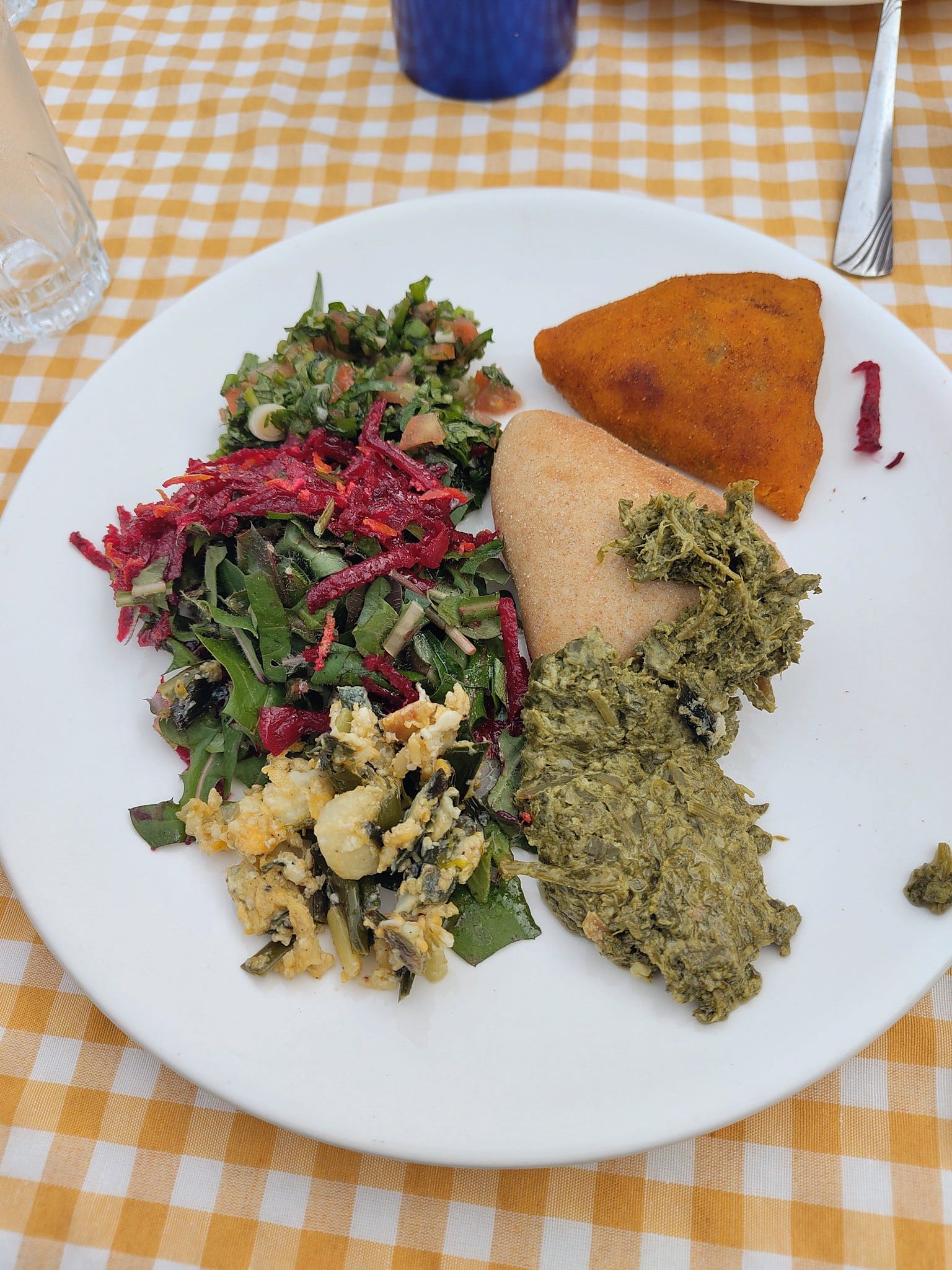
Lunch at the guesthouse is sublime. The table is heavy with pastries and salads and bowls and bowls of mezze, or appetizers. There’s one dish in particular, eggs scrambled with wild onion, that I go back to again and again. I can’t believe I just pulled those onions out of the ground two hours ago.
Sitting in the yard, eating under the pale blue sky, trees and mountains and orchards all around us, I feel calm. My body declenches. I realize, for the first time, how tightly wound my nervous system is when I’m in Beirut compared to here. In my neighborhood, Achrafieh, it is virtually impossible to walk a single block without some sort of obstacle on the sidewalk: metal prongs sticking out of the ground, cement bollards, piles of dog shit, broken and uneven pavement, an electric scooter with a rain hood, a security guard in a plastic white chair scrolling his phone, an enormous, shiny black SUV half-parked on the sidewalk, half on the road. I am always glancing down when I walk. And then there are the military drones. The never-ending buzzing, worming its way into your ears, then your lungs. In the mountains there is none of that. It’s just the mountains.
And then we hear a pair of booms in the distance. They sound like thunder, but there is no rain. No dark clouds. We all look up.
“What was that?” I ask, but no one at my table answers.
At the next table, I can hear the guide laughing, again in that wry way. He nods to a woman and says, “She lives in Nabatieh – she’s not even fazed.” Nabatieh is a city in southern Lebanon that is bombed every week.
It’s February 2025 and I am walking down Rue Gouraud in Gemmayze, on my way to meet two new friends for dinner. It has only been days since we all arrived in Lebanon. The street sings with the sounds of cars, scooters, cafes and restaurants and nightclubs. Along the way I see a sign with a familiar logo. Funding from USAID, it declares, was instrumental in repairing the damage caused to this street by the August 2020 port explosion.
I’m the first to arrive at the restaurant. When my friends show up, I’m in tears at the table, alone with a tray of fries. “I can’t believe it’s gone,” I keep saying. “I can’t believe it’s just gone.”
“I’m scared,” I tell my doctor. “I think there’s something wrong with my brain. It doesn’t work like it used to. Should I see a neurologist?”
“You could,” he says, “but I suspect it’s just the result of stress. It’ll get better after a few months of rest and recovery.”
I’m hoping he is right.
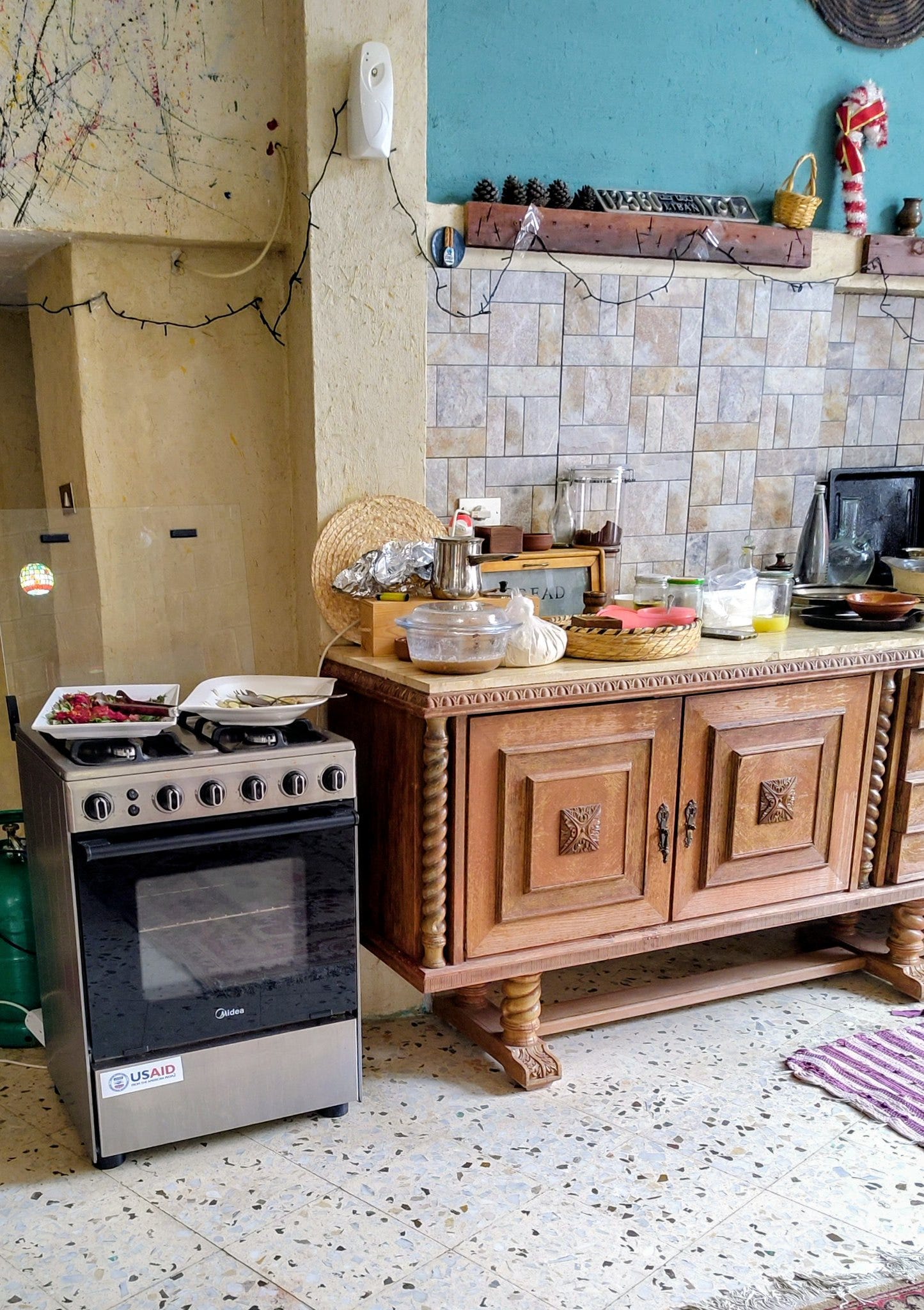
It’s February 2026 and I am in the mountains. Lunch is not yet over, but I’m so tired. I slip into the house and lie back down on the couch. From here I have an obstructed view of the kitchen, and I see the stove where the host had prepared our delicious meal. On the stove is a USAID sticker. The yard is filled with the sound of forks clinking against plates, of good conversation and merriment. My eyes warm, but this time I don’t cry.
Some things, I realize, are never truly gone.
Wishing you a peaceful and joyous start to the new year.
So many updates! Thank you for sharing and for those pictures - colorful time capsules to print and keep in a non-digital photo album. =)